Christopher Nolan’s new film Dunkirk is widely released in IMAX theaters and refreshed new enthusiasm for the cinematic technology. Of the IMAX showing, Nolan said: “This is something that nobody will ever be able to see in their living room.” With Nolan – the visionary director for Inception and Interstellar – throwing weight behind IMAX, the technology is said to go mainstream.

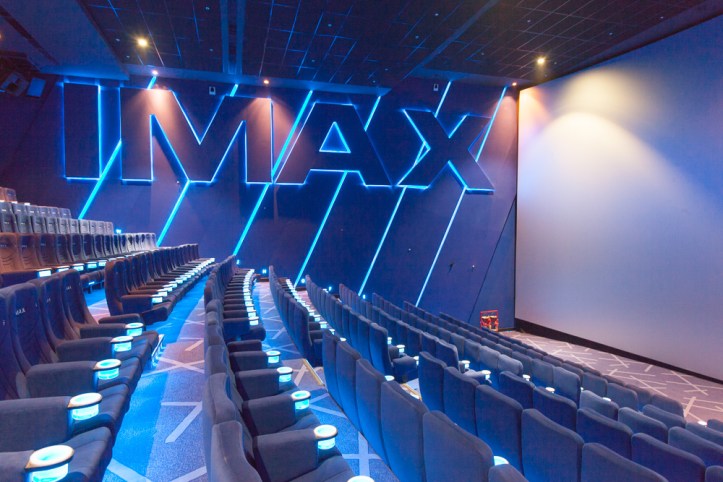
Image: Shaw Theatres
But for most of us, IMAX came to mind as the biggest movie screen that we can find. For many, it means the most expensive movie ticket. (In Singapore, an IMAX ticket is twice the price for a standard movie.) And probably for some, it is just a sales gimmick.
What’s the real deal with IMAX? How did it come to its being and what makes it special? Here are a few things to know:
1. IMAX is from Canada
Though US has the most powerful movie industry, it is its northern neighbor Canada that invented IMAX.
During 1967 International and Universal Exposition in Montreal, a group of Canadian filmmakers produced a multi-screen film as part of a competition to create the large-screen film experience. They did it by synchronizing nine projectors, but it wasn’t without flaws. In the next three years, they overcame many technical challenges and created the technology now known as IMAX.
The first permanent IMAX projection system was installed in 1971 in Toronto, Ontario Place’s Cinesphere. Now there are more than 1,200 IMAX theaters in 75 countries.
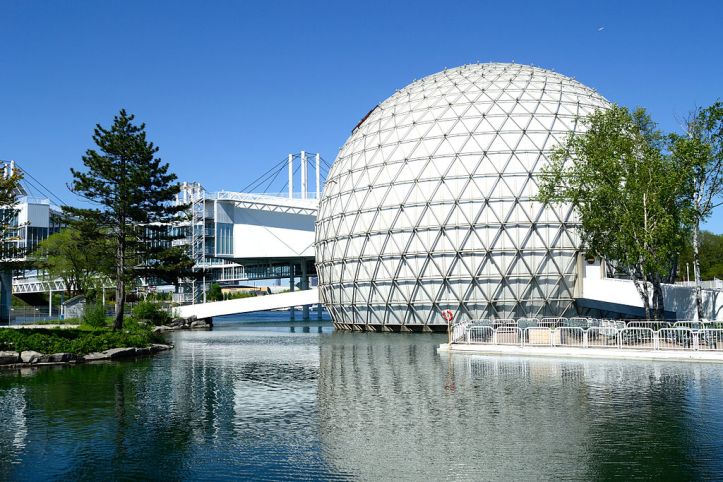
Ontario Place’s Cinesphere
2. How much bigger is IMAX screen compared to a regular theater screen?
The size of an average movie theater screen is 18 meters wide and 8.5 meters tall. In comparison, a standard IMAX theater is about 22 meters wide and 16 meters tall.
You will see taller images in IMAX theaters. The aspect ratio of a standard IMAX movie is 1.43:1; while the ratio of a standard movie, generally called anamorphic format, is 2.4:1. Some of the standard films also come with the aspect ratio of 1.85:1.
A standard movie is shot on 35mm film, while IMAX movie is shot on 70mm film. A frame of IMAX film is 10 times bigger than a frame of the standard film.
IMAX says that its camera is capable of capturing up to 40% more image. But not all IMAX movies are shot with IMAX camera, which is bulky and heavy.
About 70% of Dunkirk is shot with IMAX camera, according to the cinematographer Hoyte van Hoytema.
3. What are the main differences of the IMAX theater?
For better quality on a large screen, IMAX theater uses dual projection to project a film. The clarity and detail come to life with two projectors running simultaneously.
IMAX Sound is also unique. It is an integrated sound system that uses precise speaker orientation. No matter where you sit in the theater, the system makes sure you can hear even the lightest note in a movie.
IMAX theaters are customized for a more immersive experience, both in terms of viewing and hearing. So for those who doubt it’s just a bigger screen or a gimmick, it is not.
4. Where can you find the biggest IMAX theater?
Well, it is not in Canada, nor US.
Apparently, Australians have a thing for big screens. Currently, the largest IMAX theater is in Melbourne, which measures 32 meters wide and 23 meters tall.
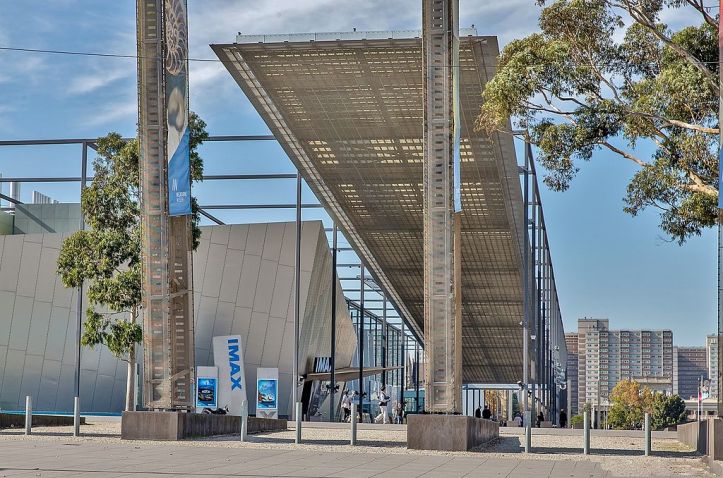
IMAX Melbourne Museum
The record was previously held by IMAX Sydney Darling Harbor that stood at 35.72 meters wide and 29.57 meters tall. It is closed for redevelopment and slated to reopen in 2019. When completed, it will be slightly smaller than before but will still be the largest IMAX screen in the world.
 The Tip Box
IMAX is great and mostly worth the extra expense. Nice post!
LikeLiked by 1 person
Yes, I think IMAX is great too. Thanks!
LikeLike