The advertising industry has taken several turns in its history. It used to be a very direct way of selling things: salesmen came to our doors to tell us how good their products were; posters hanging on the walls with products’ names explicitly displayed in a public place; brochures sent to our homes, in-print advertisements in newspapers and commercials aired on TV.
Later, promotion of products in advertisements became less straightforward and more indirect. Fraim (1990) cited Packard’s remarks about this change: ‘It used to be the brand identified the product. In today’s advertising the band is the product’; and
Modern advertising… has an almost total obsession with images and feelings and an almost total lack of any concrete claims about the product and why anyone should buy it (Fraim 1990, p.2).
Advertisements have taken different forms to reach us and try to get our attention, but their ultimate purpose has never changed: they want us to buy the products. As consumers, we know exactly what products, or in some cases – brands, are being talked about in ads. The advertisements have become so omnipresent that they can be spotted in all aspects of our lives, but we have also learned how to avoid them and turn away from them. Only from first glimpse, we can tell what trick they are playing.
Well, that’s changing too. Today’s advertising business has become a hazier territory. We may think what we see is what is being promoted. But deep down, another product or a brand is being promoted as well. Sometimes we can’t sniff it out easily .
As analyzed by Fraim (1990), ‘sales’ is not used in advertising anymore; instead, it is replaced by ‘modern psychological buzzwords like subliminal persuasion’. But the ubiquitous advertisements also resulted in forming the knowledge about the existence of promotional culture – we know that whatever form the advertising is taking, they are there trying to get our attention. This has prompted a more careful response: products now do it more surreptitiously without our knowledge. Let’s take a look at two typical examples of the most popular smart phone operating systems: Apple’s iOS and Google’s Android.
Apple is probably the leading consumer electronic product that’s directing the way of this type of advertising. Apple’s affiliated services – App Store and iTunes Music Store are bundled with its own products – iPod, iPhone, iPad and Mac computers. Consumers are bound to use these two services to fully utilize Apple products. We can’t download apps without access to App Store; we can’t import music from anywhere except from iTunes.
Since consumers are expected to unlock the full potential of an Apple product, we are also expected to use App Store and iTunes Music Store. This, however, has a complication – it involves promotion of other products and services. For example: the most popular mobile game Angry Birds was first released on iPhone and iTouch’s smart platform – iOS.
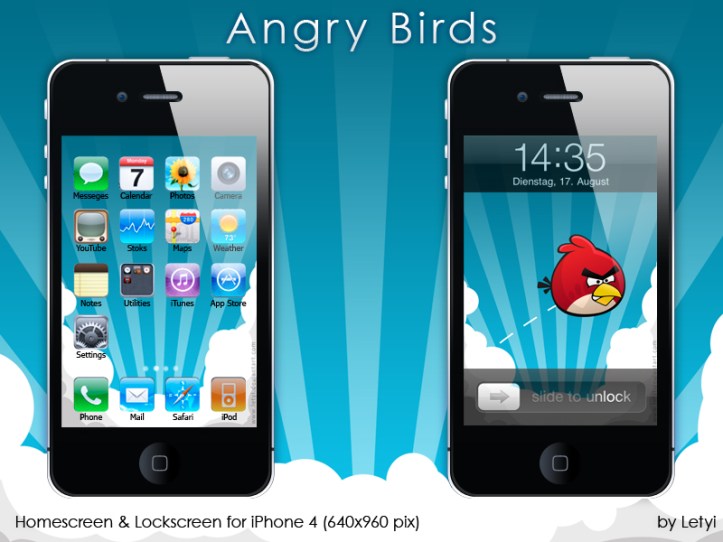
Capitalizing on Apple’s fame, Angry Birds has thrived and earned a coveted position. But don’t forget another fact: any publicity Angry Birds made for itself, it was in the same time making publicity for Apple. Consumers sometimes can’t tell who is promoting whom. We are only allowing a hidden message creeping into our mind, which sometimes we can’t even recall why we immediately associate one thing with another: “Angry Birds! I’ve heard so much about it. I think it’s on iPhone or iTouch.”
Apple has gained free publicity from Angry Birds sold on App Store. However, this is definitely not in the sole benefit of Apple. Why Angry Birds chose iPhone to launch its mobile game? There was Windows Phone from Microsoft, Symbian from Nokia. So why pick iPhone? At the time Angry Birds was still an obscure name, iPhone had already made headlines in myriads of media outlets. Never mind doing free promotion for Apple. Let’s just call it a mutual-benefiting advertisement.
While Angry Birds is gaining popularity for itself, Android “hijacked” this popularity to promote its fledgling smart phone system to compete with the already famed iOS. While Apple is charging users for the full version of Angry Birds, Android Market provided it as a free app. Angry Birds made this move to further expand its turf on smart phones, opening a bigger market for itself. Meanwhile, Android has also gained momentum for its sales. This is another case of blurring the boundary of specific brand promotion: consumers are again left confused or even unaware of which product is particularly being promoted in an advertisement line: “Angry Birds now available on Android for Free!” (Yahoo!® News, 2010). Some may have interpreted it as an Angry Birds ad; some may have thought the other way. But in either case, both Angry Birds and Android are winners. So it’s another mutual-benefiting advertisement.
This is only one example of the apps on smart phones. What about the other tens of thousands of apps available on App store and Android Market? They do advertisements in magazines, on websites, on our mobile devices and through social networks. They are not promoting their own products alone. Apple and Google have also gained huge benefit through these third-party promotional activities.
Don’t forget mainstream news organizations, which dictate discourses in public arena, are doing this favor for Apple and Google as well. Remember when we read magazines or newspapers, there is always some small advertisement seen in a prominent space?
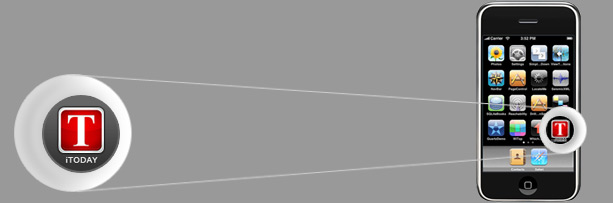 Image: Today Online
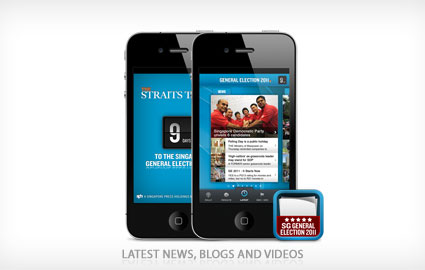 Image: Straits Times
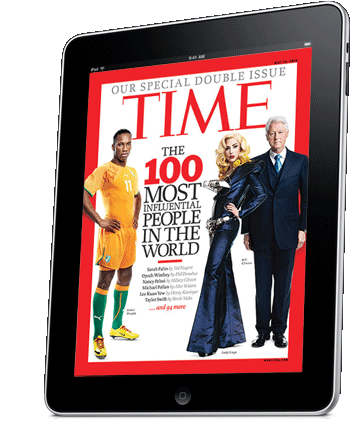 Image: Time.com
As readers, how do we respond to these advertisements? Our first thought would naturally be: This has got to be some hype Today/Straights Times/Time are generating for themselves. They just want to reach out to more readers. But has any undetected message seeped into our mind? With these icons keeping jumping into sight, we might have subconsciously formed an idea that Apple’s products are the most powerful and the coolest consumer electronic products. How sure are we that this idea is not going to affect our purchasing choice when the next time we need to buy a MP3 player, a smart phone or a tablet computer? We might immediately think of buying an ‘i’ product, because our mind keeps reminding us of an associated image, which we sometimes might not even able to recall when and where we have seen it. “Oh yes, I think ‘i’ product is best suited for me. Because I know it can do so many wonderful things.” That line might just blurt out without us giving much thought about it.
Did Apple paying any money for this indirect advertising? No. The third-party app developers – in this case mainstream media outlets, did all this for Apple, free of charge. This is a vindication of Nixon’s (1997, p10) point:
… a complex set of determinants [is] shaping what is ‘taught’ and ‘learned’ about the new technologies, making it difficult, if not impossible, to separate the entertainment, promotional, educational and cultural aspects of such sites and events.
Android is doing the same thing. It might have done it in a smarter way. Unlike Apple, who solely controls iOS platform and its hardware products, Google gives its Android platform to any handset maker for free. As a result, all major smart phones have adopted Android to develop their products: Motorola, Samsung, Sony, HTC, LG, Acer… This has turned out not so free after all. Any advertisement these handset makers is doing, it’s also garnering publicity and gaining popularity for Android.
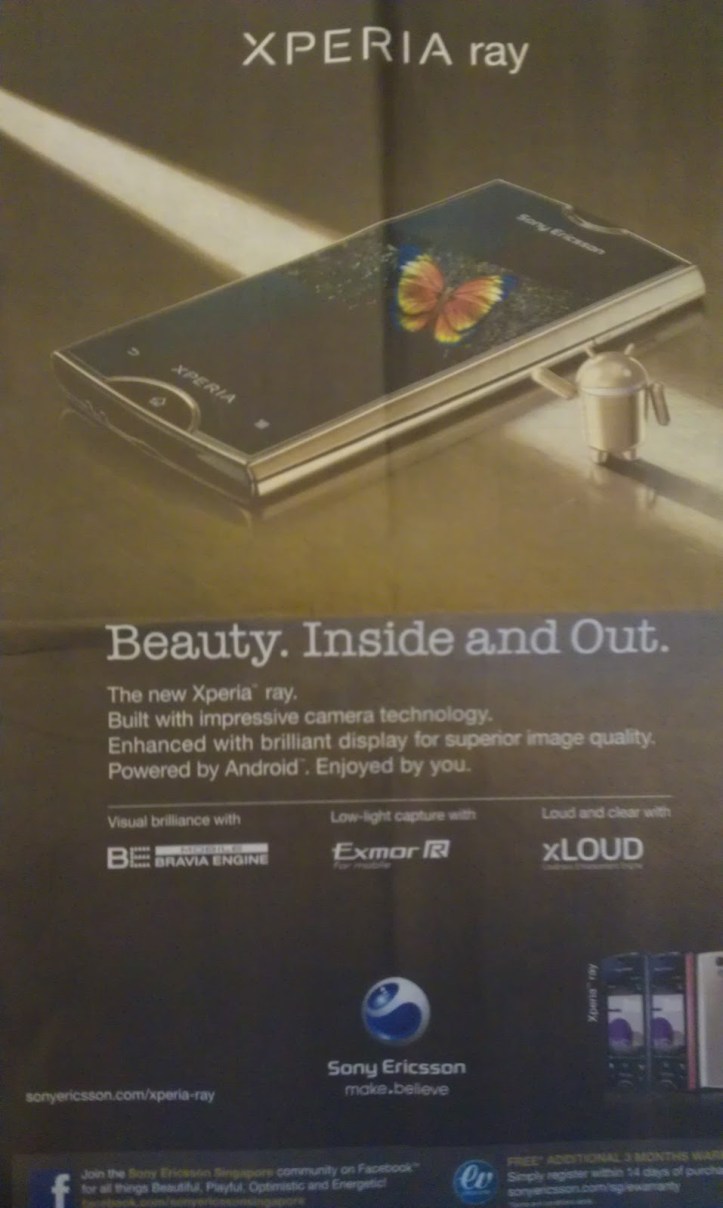 An Sony Ericsson phone ad on Straits Times paper
This is an advertisement for Sony Ericsson’s new smart phone model Xperia Ray, taking a whole page in The Straits Times (Sep.18.2011). Though the phone is unarguably the central image, Android’s iconic bot has not been left out of focus either. Not to mention the words below shouting loud: ‘Powered by Android™. Enjoyed by you.’ Google is not paying this, Sony Ericsson is. Nevertheless, Android has made publicity as well.
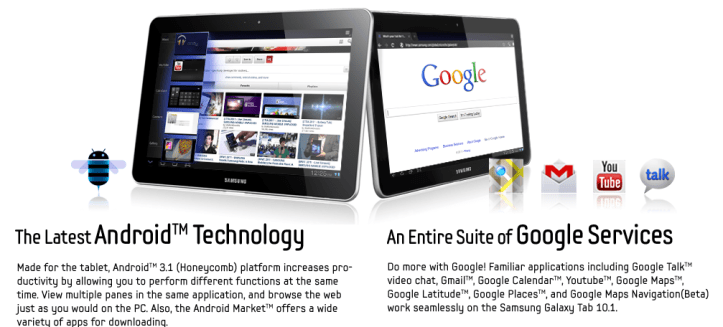
Image: Samsung website
This is an advertisement featured on Samsung website and in the brochures at telecommunication stores. If it was not advertised by Samsung, it’d be hard to tell from first glimpse which product exactly it was promoting: Samsung Tablet, or Android and other Google services.
The above two mutual-benefiting advertisements are the examples of how Android taps into other products resources to promote itself. Whether a customer’s loyalty lies with Sony Ericsson’s or Android, Samsung or Android, they are both winners in each case.
Android has become the most popular smart phone system in the world by the first quarter of 2011, according to Fortune Magazine’s (2011) statistics. Last month, Google acquired Motorola Mobility, making Google capable of manufacturing its very own integrated smart phones – both hardware and software. With the help of Google Ads’ penetrating capability and Google Search’s might, Google will further broaden its user base. We may see more search results of Motorola when Android is the key word; we may see more ads featuring Motorola pushed to our mobile devices.
Besides these apps and handset advertisements, more indirect advertising is also seen in merchandisers. When iPhone first opened the market in Singapore, the deal was only given to Singtel. As a result, Singtel advertised itself as the “exclusive” provider of iPhone. In the same time, Apple enjoyed the most publicized brand promotion. This method was highlighted by Kim (2002) in his analysis of indirect advertising methods employed by tobacco companies:
Trade promotion to retailers… is designed to stimulate in-store merchandising… and to create a high level of excitement about the brand among retailers (Kim 2002, p.132).
Android has a separate page on Singtel’s official website: Android Nation.
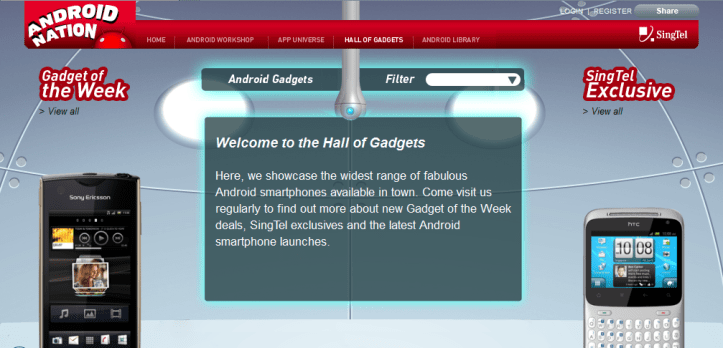 Image: Singtel website
What we are looking at is an advertisement involving multiple players:
- Singtel is the prime focus, boasting apps of its own and a variety of handsets;
- Android has been widely featured in this advertisement too, being talked about its functionality and features;
- Handset makers are clearly exhibited as well: Sony Ericsson, HTC… More if we roll it over to the next page.
Who is exactly being promoted in this advertisement, Singtel, Android, or the handset manufactures? We can’t single out just one party. Even if we do, we have to admit something else in the background has already imprinted into our consciousness. It’s pointed out by Fraim (2000, p5): ‘a media site becomes one pervasive direct mail ad for every product mentioned on its site.’
From all the above examples, what we witness here is the once clear-cut target for product or brand promotion is fading or even disappearing, the line of direct marketing has broken. We are letting this type of integrated advertising strategy sneaking into our lives: one brand is embedded in another brand, or even embedded in another more. In the end, we can’t even differentiate which brand is being sold to us. Just like Farrington (1999, p.2) said:
We may not pay attention, but we see and hear the messages all the same… and, somehow, they find a way to “hang” with a few of our brain cells.
This is not to imply that manufacturers, merchandisers, service providers and the media are secretly conspiring among themselves to trick us consumers, but we can’t prevent such a day from finally coming: a day that we can’t tell an ad is an ad. Just to give an example: We see an image without any text so well blended into an architecture or the surroundings, that we feels like it is part of the whole picture. We are not aware of it’s actually planting a hazy idea in our mind. It has the power to trigger a sense of familiarity or evoke a nostalgic feeling on a later day when we are shopping, prompting an uncontrollable impulse in us to buy a specific product. Imagine how cool that is! This is just like what Farrington (1999, p.2) suggested:
The ultimate power of advertising will be arrived at when ads cannot be distinguished from their background environment. When this happens, the environment will become a great continuous ad.
Consumers get annoyed by the ubiquitous advertisements. The industry or the product manufacturers know just that and that’s why they will come out with more ingenious ways to circumvent our scrutiny. The trend of embedded advertising will only grow.
References:
Farrington J 1999, ‘Are ads making you sick?’, Current Health 2, vol.25, no.8, pp.6ff.
Fraim J 2000, ‘Friendly persuasion: the growing ubiquity of advertising, or what happens when everyone becomes an ad?’, M/C: A Journal of Media and Culture vol.3, no.1.
Kim K 2001, ‘Selling smoke to Asia: an historical analysis of confronting US policies on cigarette advertising and promotions’, Asian Journal of Communication, vol.12, no.2, pp.120-140.
Kowitt B 2011, ‘One hundred million Android fans can’t be wrong’, Fortune Asia, no.9, pp.58-63.
Nixon H 1997, ‘Fun and games are serious business’, Digital Diversion: Youth Culture in the Age of Multi-Media, (ed) J. Sefton-Green, London Press, University College London.
Robinson B 2010, “Angry Birds” Now Available on Android for Free, Yahoo!® News, viewed 9 September, 2011, <http://news.yahoo.com/angry-birds-now-available-android-free.html>

