Once upon a time, Chairman Mao ruled China and pushed for an economic model that emphasized on collective wealth – wealth is more or less equally divided among those who are making contribution to the community, and no one is richer than the other.
But his economic policies wreaked havoc on Chinese people’s lives. Realizing that mistake, China started market reforms since the 1980s and decades later, transformed itself into an economic powerhouse.
I grew up in China during those changing years and always thought that the era of Mao had long become a nostalgic idea that only exists in Chinese pop-art. Then in March 2016, I visited a special village in Henan province, which overturned my impression.
The name of the village is Nanjie, a small town in Luohe city, Henan. Despite all the changes that have taken place around it, this small village still stands proudly today as the last stronghold of Chairman Mao’s teachings.
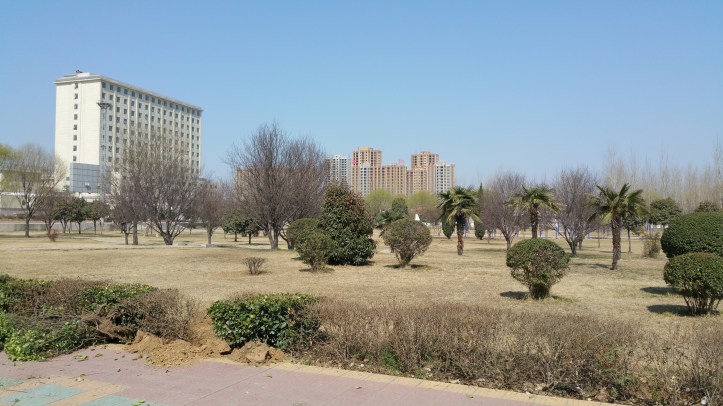
Nanjie’s economic model was built on Maoist ideology. Every bit of it invokes a past that the entire country has left behind. There is no private enterprise in this last enclave of Maoism. Collective wealth is divided among those who contribute.
Entrance to the red village
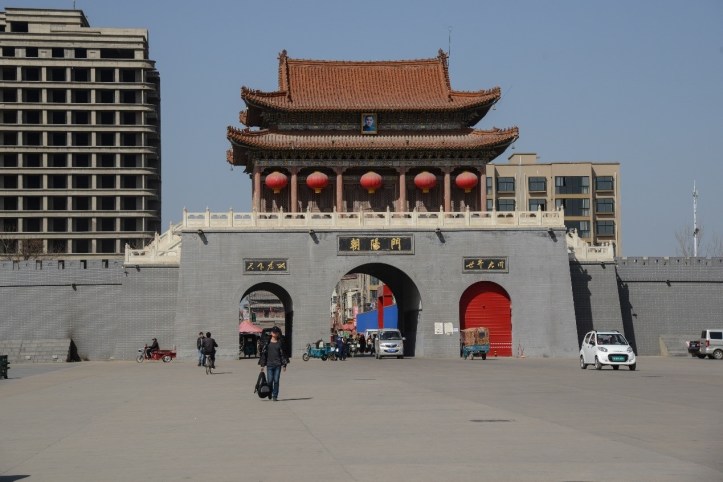
The first sign of the village that I noticed was a huge signboard that hangs over the road to the village. It has a red insignia that carries the distinct characteristics of the Maoist era.
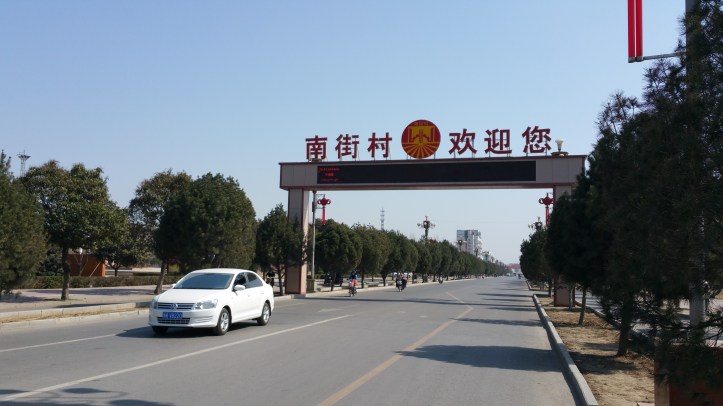
After I got onto the road, I was immediately transported to another world, separate from the rest of Luohe city that surrounds it.
Loudspeakers are blaring the importance of chairman Mao’s thought in a flat monotone. More speakers are fixed every 100 meters or so along the road and they repeat old revolutionary songs.
A few minutes’ walk past the entrance is the biggest restaurant in the village, named the Red Restaurant. In the dining hall, pictures and teachings of Chairman Mao adorn every side of the wall.
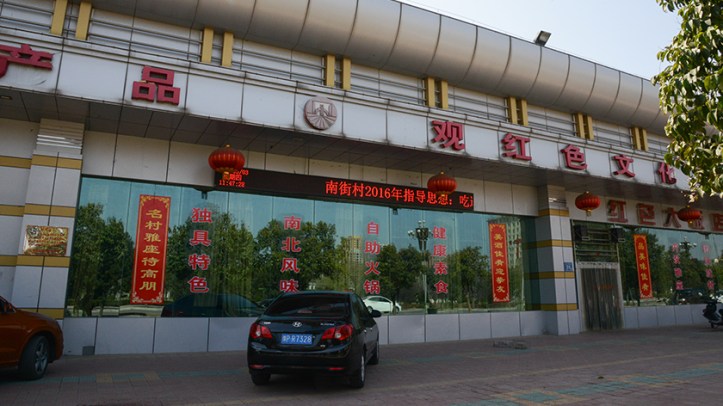
I sat down at a table with identical dining sets and was served by waiters and waitress dressed in uniforms of the “Red Guards”. I also spotted similar styled staff at the only hotel in the village for visitors who choose to stay overnight.

The restaurant is only for tourists who need to pay for their meals, which are different from what the locals receive. The villagers dine at another canteen for free and only visit the restaurant for special occasions such as a wedding ceremony.
The back door of the Red Restaurant leads to a square for community events. Unsurprisingly, the stage – “Grand People’s Commune Stage” – has the look from the 1960s or 1970s. Needless to say, most stage performances involve odes to the achievements of Chairman Mao.
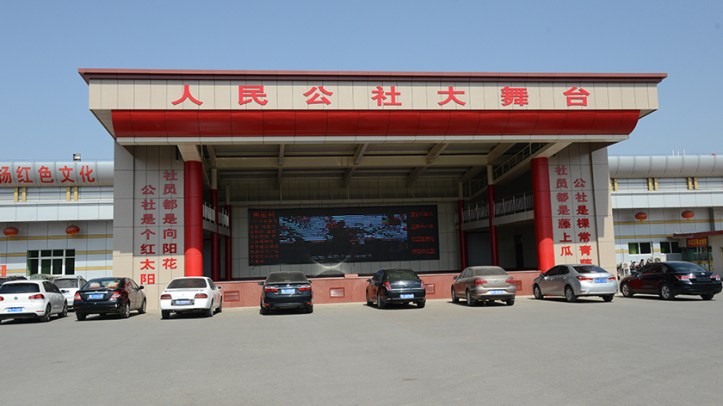
Inside the red village
I spend a day in Nanjie and found the experience amazing but sometimes intimidating.
Apart from the collective enterprises, tourism is the next largest income generator for this little place stuck in time. Tourists are allowed to walk around the village, but need to pay RMB80 (AUD16) for permission to enter certain buildings. A buggy ride around the village, accompanied by a professional tour guide, comes at a cost of RMB10 (AUD2).
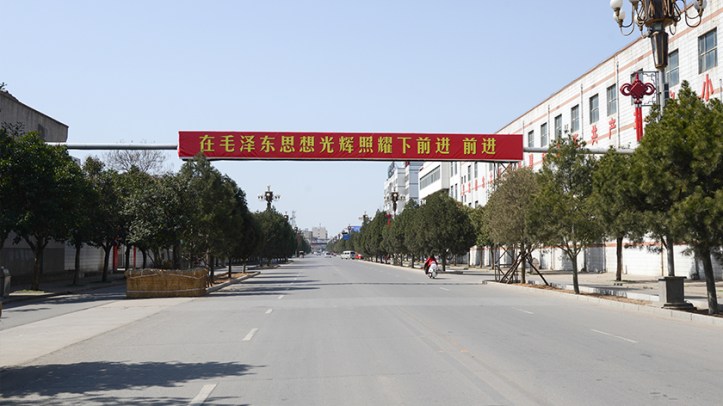
This is a quiet village broken only by loud red banners with slogans such as “March ahead under the glorious guidance of Chairman Mao’s thought” and “All hail to the indisputable thought of Chairman Mao”.
In the center of the village is the town square, which consists of a large statue of Chairman Mao flanked by posters of Marx and Engels, whose communist ideology inspired Mao’s theory. A big banner rises over the statue, stating: “Mao Zedong’s thought shines over us forever.”
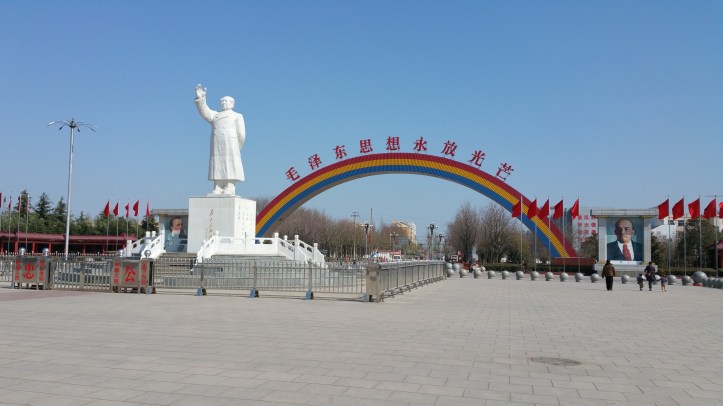
Villagers sometimes walk to the square to pay their respect to Chairman Mao and even pray for his blessings.
Every resident of Nanjie is said to be a firm believer of Maoism and all the children are drilled in Mao’s thought at school. Probably the staunchest of them all is the village leader – Wang Hongbin.
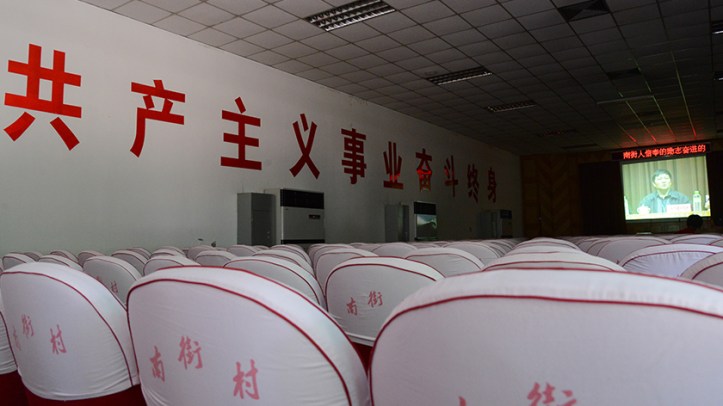
Though Wang humbly calls himself “just a peasant from a small village”, he is charismatic and eloquent in his debate about the practicality of Maoism in modern China. Chairman Mao’s theory “works very well in today’s environment and Nanjie has proved he was absolutely right”, says Wang unabashedly in a video played for visitors at the village Cultural Center Theater.
A communist party secretary since 1977, Wang persuaded the farmers in the area to share their land which was turned into collective factories. The more than two dozen factories that pay a standard RMB2,000 (AUD407) monthly wage mainly deal with food processing, packaging and printing.
The most famous product out of this village is instant noodles. Nanjie is China’s biggest instant noodle manufacture base, producing 380 tons a day.
Apart from free medical care and education, each of the 1,080 families in Nanjie also receives free housing. They live in apartments. The size is decided by the number of people in the family: The 72m2 flat is given to the one-generation family, while the 90m2 is given to the two- or three-generation family.
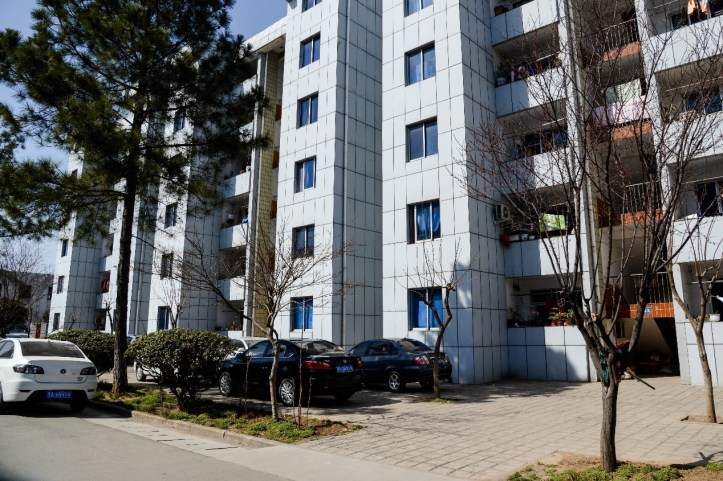
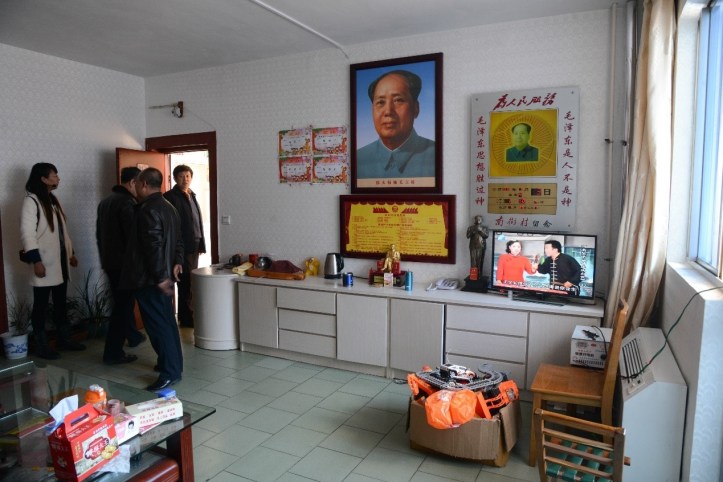
The local tour guide led me into some of the apartments and I noticed the standard design and furniture. As expected, a poster of Chairman Mao hangs on the wall of the living room. According to the tour guide, electrical and water bills are covered by the village council.
Nanjie doesn’t have any university, but the village council pays tuition fees for anyone who pass the entrance exam to study in universities in other parts of China. And for those who don’t, they are given vocational training for free.
A strange existence
For a village that has only a population of 3,900 and a size of merely 1.78km2, its sales income reached RMB2.1 billion (AUD431.47 million) in 2016, the same year of my visit, as reported in Sina News.
Despite the seeming success, Nanjie’s model is still a controversial topic in China. Even for tourists from other parts of China, the village is at odds with the rest of the country. Its development is monitored by the central government and watched by many netizens. It has also roused a big debate in China. Some people say it’s bound to fail, and some argue it’s just a gimmick to lure visitors and investment.
The village itself is a conundrum. Though the welfare system is worth the envy of any rich state, a small number of residents opted to work outside the village and pay for the things that are given for free to people who work at the community factories.
Nanjie is also literally contained in its physical boundary, and the neighboring towns are not interested in copying it.
Perhaps, Nanjie’s meaning lies less in its blatant promotion of red culture, but more in its symbolism as a past idea that people can still hang on to. Whether it will continue to thrive as believed by the villagers or fail as predicted by doomsayers, it is definitely an intriguing tourism spot for visitors.
A break from the routine
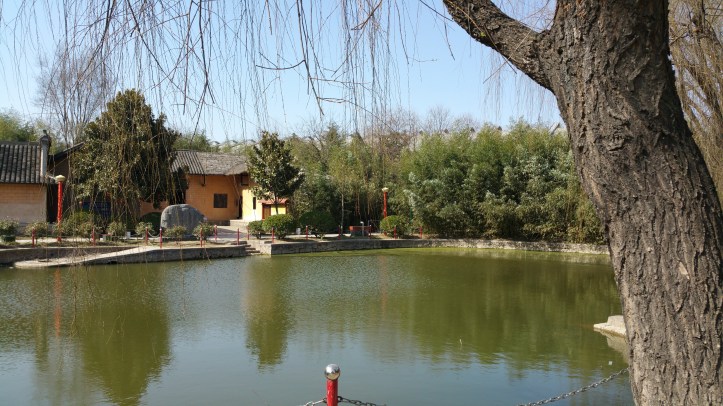
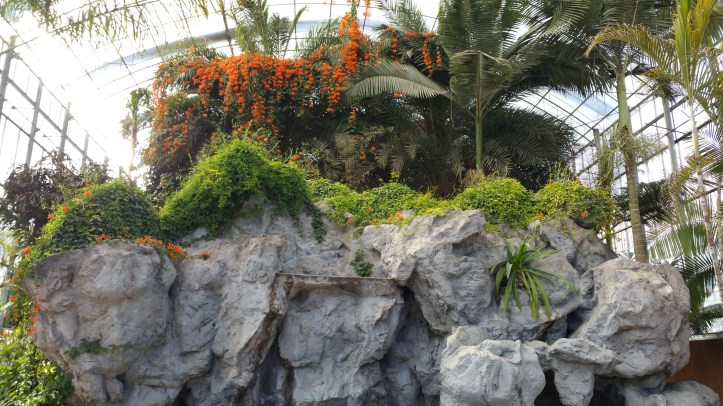
Other than “red tours”, there are also other parts of Nanjie that are open to visitors, which seem very much like the rest of modern China. The Botanical Gardens in the north corner of the village is one of such spots.
The 9,980m2 garden is divided into seven different zones, such as Flowing Garden, Subtropical Garden, Fruit Garden, Bamboo Garden and the Organic Farm. In these gardens, there are thousands of different types of plants and trees from all over the world, including some rare species.
To get a better feel of the village, I popped into the food court next to the Red Restaurant. It’s popular among local residents and serves visitors too. This is a Muslim food court, serving very affordable halal food made with locally produced ingredients.
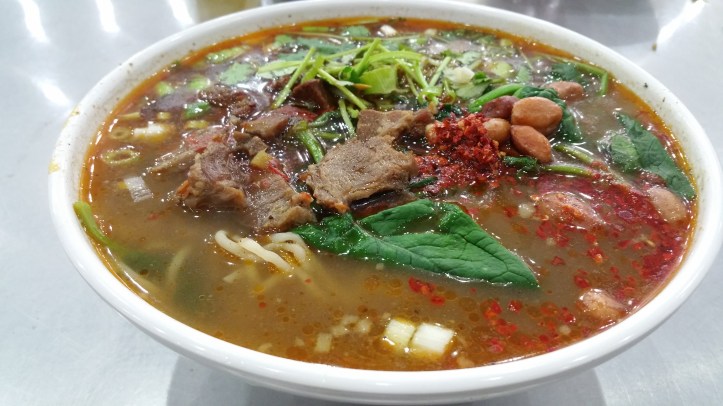
Highly-recommended is the Spicy Beef Noodles which costs only RMB15 (AUD3). The noodles that come with a chewy texture are handmade by local Muslim residents. It is served in a soup mixed with lots of chilli powder, spring onion, coriander, peanuts and fresh vegetables. A dash of spices and tender beef slices make this a taste-bomb on the buds.
 The Tip Box