Jigong Mountain is one of the most famous summer resorts in China. From June to August, many flock to the mountain to escape the summer heat.
I, on the other hand, visited the place in December 2015 and had the mountain to myself. And weather in early December was tolerable. A warm jacket was enough for me to keep out the chill and the occasional sprinkling of snow.
The mountain, about one hour’s bus ride from Xinyang city, looks different in each season as the flora changes colors, dressing it in different hues. It is devoid of its usual liveliness in winter, but the monochrome and the quiet present another side of its beauty.
The resort
The vast summer resort sits near the top of the mountain. Inside the compound are villas with different styles and distinct features, forming a unique “world architecture museum”.
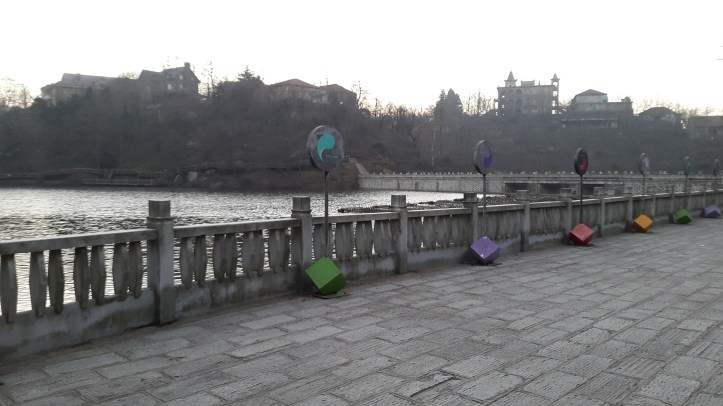
The buildings are the legacy from the late Qing dynasty (1644 – 1912). Built by Chinese warlords as well as foreign diplomats and missionaries from 23 countries, these summer vacation homes and gardens stand as a testimony of China’s first public concessions in its history.
Some vacation houses, such as Yilu Villa and Hankou Villa, are also open to visitors.
What drew most to build the vacation houses is the same reason that people today throng the mountain – the favorable weather condition.
Though the mountain is only about 765 meters above sea level, it has a unique alpine climate without mountain reactions, making it a natural summer retreat. The average summer temperature on the mountain is 23℃, which is about 4℃ to 5℃ lower than that of Xinyang city.
Locals describe the weather as “spring before noon, autumn in the afternoon and early winter at night”.
Another piece of history on Jigong Mountain is the buildings used by General Chiang Kai-shek during China’s war with the Japanese.
In 1937 and 1938, then Chinese political and military leader Chiang Kai-shek and his US-educated wife Soong Mei-ling stayed here on vacation. China was then fighting a fierce war with Japan and the country was in tatters. But on Jigong Mountain, life went on as usual and even dance balls were held, as the mountain was deemed impregnable.
A prominent structure is The Dance Hall of Mei-ling. Originally built in 1918, the building consists of 12 rooms and spans 396m2.
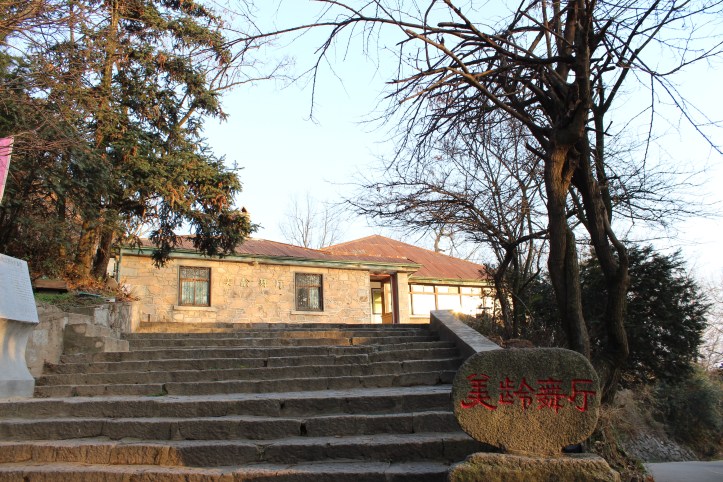
Jigong Mountain Scenic Area Management restored the Dance Hall to its original appearance and added photos and books about the life of Soong Mei-ling, who played a central role in Sino-US relationship in contemporary China.
Locals gave the building the nickname “the glass room”, as its walls above 1.5 meters are almost entirely made up of windows and glass.
Further up stands the wartime office for Chiang Kai-shek. During the war, Chiang Kai-shek held meetings with his generals and consultants here. In 1938, it was here that he formulated the strategy for the Battle of Wuhan, a significant large-scale battle with the invading Japanese army.
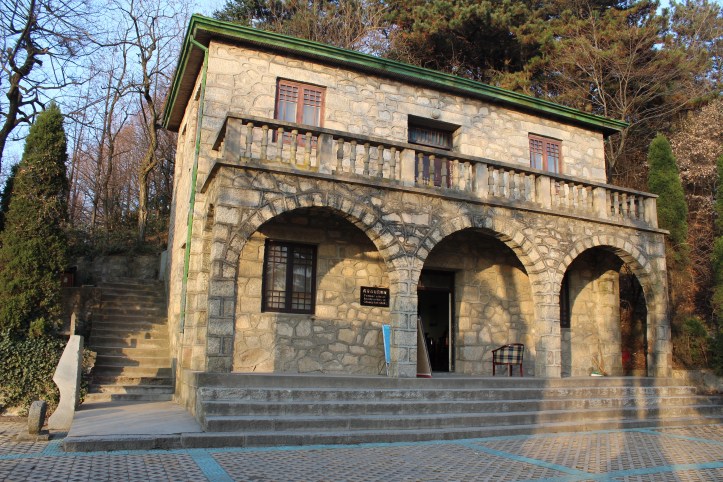
For the protection of the military leaders, the building is also connected with underground tunnels, which Chiang Kai-shek used several times.
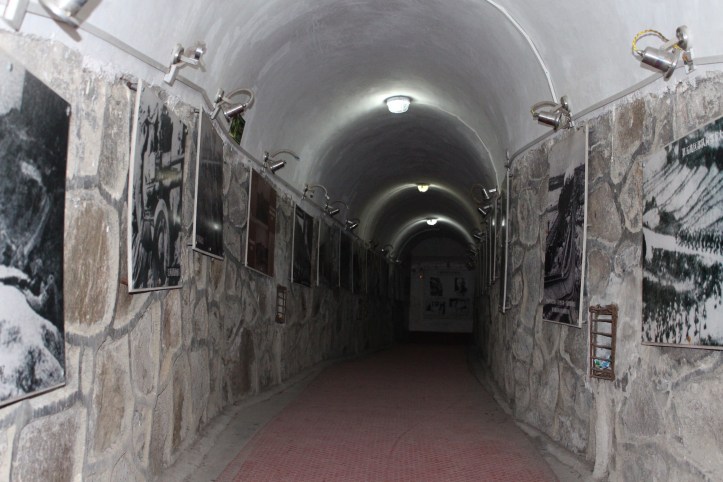
Just a few steps apart from the headquarters and right next to a gazebo is Wolf Teeth Mountain. Because it’s so steep and treacherous, it provided a natural defense for the headquarters.
The peak
At the top of the mountain is the Dawn-Heralding Peak look-out, where I discovered the reason for the mountain’s name.
Seen from afar, the Dawn-Heralding Peak resembles a rooster flying in the cloud. The head of the rooster points to the neighboring city of Wuhan, the capital of Hubei province in southern China. Standing on the peak, I am practically on the border between China’s north and south.
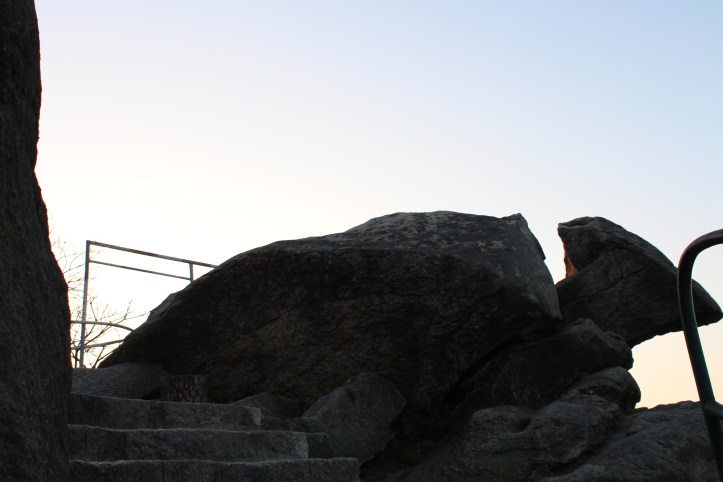
By the time I reached the top, it was late afternoon and I was compelled to stay to catch the sunset.
Locals dubbed the glow of the sun “the light of the Buddha”. The magnificent display of the sun is the most captivating view on the mountain, which has become a beautiful memory of my trip.
 The Tip Box