I recently got a chance to work at an office in Raffles. Having worked for quite some time in Ubi, where the main scenery consists of warehouses and logistical trucks, it was quite a big change for me.
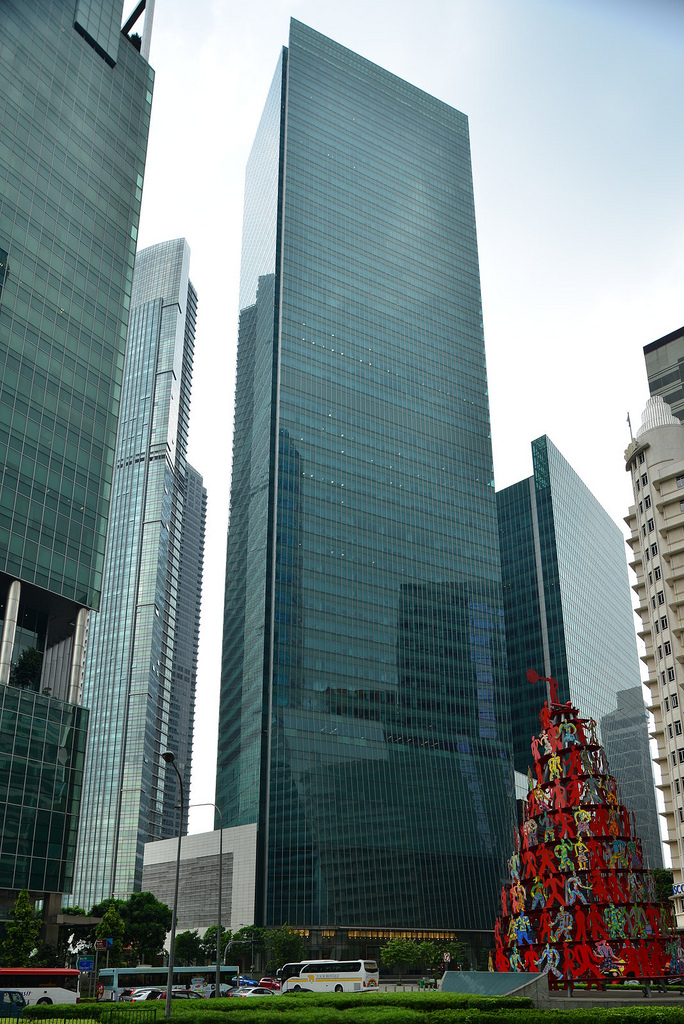
During those 18 months in Ubi, I hadn’t felt the faintest pulse of the city, though it wasn’t all that quiet. In fact, it was bustling with actions and movements, accompanied by the humming of heavy machinery and the honking of trucks.
Now you can probably imagine how excited I was to come to work at CBD. The glistening tall buildings, fancy cars, dapper dressing bankers, financiers and ravishing looking girls (Sorry, can’t help noticing!) are a welcoming fresh sight.
But my excitement soon dissipated, thanks to a major problem that people working at CBD must have experienced firsthand: It is very difficult to find a place to eat lunch.
From the most high-end restaurants to the least decorated food stalls, there is a crowd everywhere during lunch time at the heart of the city. There are even people who eat toast and coffee for a mid-day meal!
Unwilling to explore a place I was still a stranger to, I found an easy solution – join the line that was being cleared faster. That’s how I ended up eating chicken rice five days in a row in my first week.

Worried that I would turn my body fat to poultry meat, I decided to try my luck in the second week, but there is another obstacle: getting a seat.
After getting a bowl of noodles the next Monday, I strolled up and down the hawker center on the Market Street, desperately looking for an empty seat. Everywhere I looked, tables were either occupied by people or objects – tissue bags, business cards and you know, the usual. I’m used to the sight, but I also think Singapore is the only country in the world where people use tissue bags, umbrellas and business cards to mark territories at food courts and hawker centers.
Just when I thought my noodles were about to turn soggy and mushy, I spotted a table where the occupants were standing up to leave. Only a few steps before I reached the table, I was cut off by a gang of four guys, whose coordinated action was no less impressive than a military operation.
After they settled down, the biggest guy – apparently the leader of the gang – rolled up his sleeves, exposing his heavily built muscle and issued his order: “You guys go get the food, I will GUARD the table.” I couldn’t help noticing the emphasis on the word.

Judging by the guy’s size, I reckoned I would last about 10 seconds in a fight with “Mr. Schwarzenegger”. Holding back my curse, I stood down and went away.
The next day, I walked 15 minutes under the scorching sun to Tanjiong Pagar in the hope of finding a less crowded place at Amoy. Covered in sweat, I was disappointed again to see the same sight as any eatery in Raffles – a sea of people. But there was no turning back for me, unless I intended to steam myself for another 15 minutes. So I joined the line in front of a Hor Fun stall, inching forward a few centimeters a minute.
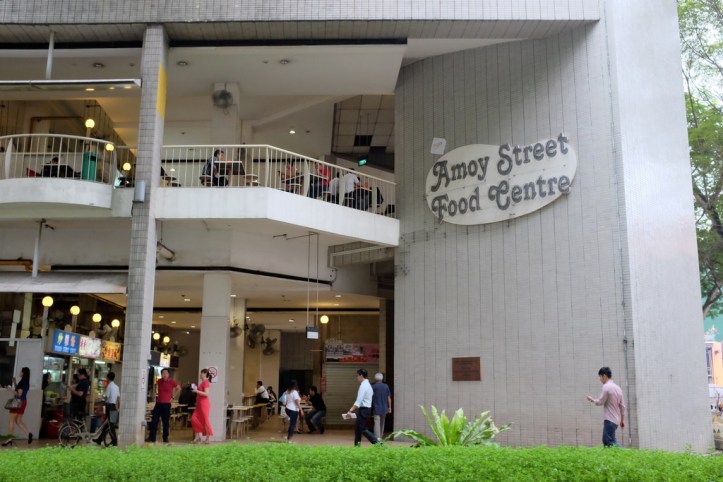
I finally brought myself to the counter after another 15 minutes in the line, only to hear the owner of the stall declare: “All sold out! Please come back tomorrow!” I couldn’t believe my ears and asked: “Do you have anything else?” The owner pointed to the next stall and said helpfully: “You can try their seafood soup. Veeeery nice!” Telling that to someone who never eats seafood, it was almost like mocking.
So that’s how I learned it’s not all that glamorous to work at CBD. Going out for lunch is no different from marching to war.
But I’ve also learned that humans are extraordinarily adaptable. After struggling in the first couple of weeks, I am now accustomed to the new style of the lunch break.
There are a few tricks to help cope with the difficulty: Going out with a group of colleagues usually helps. I can also leave office 20 minutes later to avoid the crowd, or pack my own lunch. Or simply a change of perspective: Don’t think of it as a break in the middle of the day, but an additional task to complete on top of the work in the office!
 The Tip Box