Apple has made huge headway in consumer product market since a few years ago. It is often touted as the most successful gadget maker. In Singapore, Apple’s products have become the most popular choice in the area of music player (iPod), mobile phone (iPhone) and tablet computer (iPad). Apple’s products are ubiquitous, seen in the hands of people in varied age groups from 10-year-old teens to 60-year-old elderlies. Does this mean Apple is invading the local culture, or local consumers have fallen prey to Apple’s fierce marketing campaign? Not really. Apple is only a player in this already saturated promotional culture, providing consumers with an alternative for their purchasing decisions.

Some argue that Apple promotes its products with distinctive characteristics from its origin – America, particularly the idea of being “cool” and “elite”. In American culture, people believe that if they work hard, they will get what they want. This is branded as fulfilling an “American Dream”. That dream invariably involves rewarding, which can be translated into “the harder you work, the more rewards you get”.
Possessing something that others don’t have is a means to demonstrate success. Tagging along with this label of elitism, Apple also prices its products in a higher range. In a way this might have deterred people with lower income from buying their products. In another way, it encourages people to buy Apple’s products to exhibit their wealth or show off their success. This is also manifested by Apple users’ habit of using the product: often they deliberately hang out the iPad, mac laptops in public whenever they can and wherever they are.
This idea is reflected in its early advertisement of iPad2. The following poster was among the first wave of advertising campaign in Singapore:
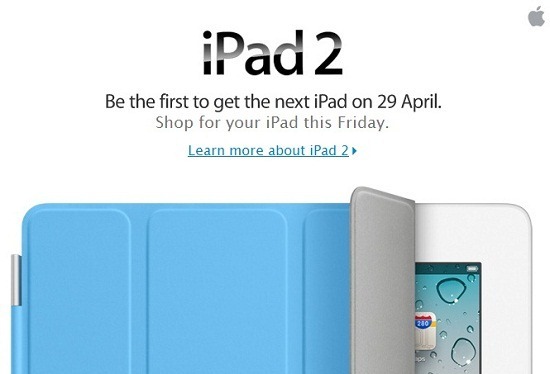
The first line below the product name is “Be the first to get the next iPad on 29 April.” But why do consumers want to be the first to get an iPad2? Why underline the importance of “the first”? Why is Apple so confident that people want to be the first to buy their newest product? Is it because if one becomes the first to get an iPad2, he gets to show his status in the society?
Not necessarily. Firstly, elitism is not the idiosyncrasy of the Americans. As Straven’s (1996) pointed out, the cultural and economic environment of Singapore has changed. Singapore continues in economic growth; per capita income is increasing (more so today); what comes together with these changes are expenditure pattern: Singaporeans spent more on recreation, as they become more affluent and have more leisure time than before. The pursuits of luxury or high-end products are also a “Singapore Dream”. Wanting to be cool and elite is also Singapore consumers’ behavior. We have witnessed people rushing to Apple’s stores, forming long queues even one night before the sale opens. The first shipment of iPad2 was sold out in a matter of an hour (New Straits Times, Apr.30.2011).
Let’s not forget about “Kiasuism” embraced by Singaporeans. Singaporeans want to be the first for everything and constantly have the fear of losing any chance or opportunity. This is also stated in Shotam’s (1998) study on ‘…middle-class way of life in Singapore’. She says that Singaporeans have the ‘fear of falling’ and a siege mentality.

Enticing consumers to be among the first to get an iPad2 is Apple’s marketing strategy. Apple is tapping into this local culture, rather than reinforcing the characteristics from American culture. Chua (2000, p.198) pointed out: ‘Whereas all imported products may be potentially imprinted with cultures of their respective origins, the consumption of the products is not automatically tantamount to the consumption of the cultures of the origins themselves.’ Singapore is flooded with foreign brands, while Kiasuism defines people’s competitiveness by nature. Apple is not changing all this. On the contrary, it’s adapting to this nature and forging the brand name as an elite in the same product category.
Now compare the advertisements from other brands in the same category:


Images: Samsung and HTC
These two advertisements from Apple’s competitors Samsung and HTC unexceptionally emphasize on their features, designs and whatever that can distinguish their products from others. What a tablet can do for a consumer is not a selling point. What consumers really need or want is the area in which these brands are competing with each other. Samsung stresses its display and camera, while HTC stresses its interactivity and stylus. In the meantime, both of them stress their design. Whether they can succeed in persuading consumers to buy their products is another story.
Consumers are already immersed in the advertising culture, which is part of popular culture. If either Samsung or HTC wins the market of tablet computer, it’s very unlikely that we are just about to hear “Koreanization’ or “Taiwanization”. Consumers know what choices they have; they know what advertisements are about. ‘Ads are ubiquitous in our culture, but are not omnipotent or monolithic’; ‘audiences have an astonishing knowledge of ads’ (Myers 1999). Like Apple, Samsung and HTC are merely trying to sell and make their business work. Consumers are given options; their choice remains their own decision. When a consumer chooses iPad over others, it’s more of the reason that he wants to look cool, willing to pay more or wants to have those abundant apps Apple gives him.
Lastly, we should also consider the political environment of Singapore, as politics is an inseparable part of the culture. Chua (2000) pointed out that Singaporean state itself promotes ‘the discourse of contestation between Asian and Western values’, and suggested that the response to a counter-hegemonic marketing of “American-ism” ‘would undoubtedly be negative from a government which polices and censors images, including advertisements, that enter the national ideological space’ (p.198). The same point was highlighted by Shotam (1998): ‘The Singaporean government’s notion of “Western” choices refers to “wrong” or “bad” choices’, and is one of ‘top-down impositions’. In an environment like this, the state is a strong hedge against the cultural invasions. If Apple was indeed imposing anything on local consumers, we wouldn’t have seen the Apple products run rampant on the streets today.
There’s no denying that advertisements ‘affect virtually everyone’s product preferences and product purchase behavior’, as mentioned by Kunkel (1994), but this is precisely what consumers need. They want to know what’s in it for them; they need advertisements to tell them more, to facilitate their decision-making and whether to buy a particular brand. Apple’s “invasion” of the local culture or the local consumers is a misunderstanding of consumer culture and promotional culture, rather than an existential challenge.
References:
Chua, BH 2000, ‘Singapore ingesting McDonald’s’, Consumption in Asia, Routledge, London, pp.183-201.
Kunkel, D, Frith, S & Biggins, B (eds) 1994, ‘Advertising regulation & child development…’, Children and Advertising: A Fair Game?, University of NSW, Sydney, pp.28-36.
Myers, G 1999, ‘Advertising illiteracies: what do audiences know?’, Ad World, Arnold, London.
New Straits Times 2011, iPad 2 sold out within an hour, AsiaOne News, viewed 20 August 2011<http://www.asiaone.com/News/Latest%2BNews/Science%2B%2526%2BTech/Story/A1Story20110430-276469.html>.
Shotam, NP, Sen, K & Stivens, M (eds) 1998, ‘Between compliance and resistance: Women and the middle class way of life in Singapore’, Gender & Power in Affluent Asia, Routledge, London, pp.127-165.
Straven, F, Frith, K (ed) 1996, ‘Advertising in Singapore’, Advertising in Asia, Iowa State University Press, pp.273-291.
 The Tip Box